

In the realm of outdoor adventures, crossing rivers and streams can be a challenging yet exhilarating task. Whether you are embarking on a hiking expedition or simply exploring nature’s wonders, ensuring your safety during these crossings is of paramount importance. To guide you in this endeavor, we present to you the top 10 safety tips for crossing rivers and streams, designed to equip you with the knowledge and skills necessary to navigate these aquatic obstacles with confidence and caution. From assessing water depth to utilizing appropriate crossing techniques, these tips will help you embrace the thrill of river crossings while minimizing the inherent risks involved.
Choose the Right Crossing Point
When it comes to crossing a river or stream, it is crucial to carefully choose the right crossing point. Start by evaluating the depth and width of the water body. If the depth is too high or the width is too wide, it may not be safe to proceed. Look for calm, slow-moving sections of the river or stream, as these areas typically have a lower water current. Avoid crossing at bends or curves, as the water flow tends to be stronger in these areas. Additionally, be sure to identify any obstacles in the water, such as rocks or fallen trees, and avoid crossing near them to minimize the risk of accidents.
Assess the Water Conditions
Before attempting to cross a river or stream, it is essential to assess the water conditions to ensure your safety. Start by checking the water flow rate. A high flow rate indicates a stronger current, which can make crossing more difficult and dangerous. Look for signs of strong currents or rapids, such as white water or a churning motion in the water. These areas should be avoided, as they can pose a significant risk. Additionally, evaluate the water clarity. If the water is murky or you cannot see the riverbed, it may be challenging to gauge the water depth and potential hazards. Lastly, ensure that the water temperature is suitable for crossing. Extremely cold water can lead to hypothermia, so be mindful of the water temperature before starting the crossing.
Plan the Crossing Strategy
Planning ahead is key to a successful crossing. Consider using a map or GPS to plan your route across the river or stream. This will help you identify potential exit points on the other side, allowing you to make informed decisions during the crossing. Take note of any landmarks, such as distinctive trees or rock formations, that can serve as points of reference for orientation. If you are crossing with a group, it is essential to discuss the strategy together. This ensures that everyone is aware of the plan and can contribute their perspectives and concerns, ultimately enhancing the safety of the crossing.
Test the Waters
Before fully committing to the crossing, it is wise to test the waters. Enter the water slowly and cautiously, ensuring that you maintain your balance. Use either your feet or a long stick to feel the current and assess its strength. This will give you a better understanding of the water’s force and whether it is safe to continue. When testing the waters, also determine if the footing is stable. Loose gravel or slippery surfaces can make crossing more treacherous, so it is crucial to ensure that the ground beneath you provides adequate stability.
Wear Appropriate Footwear and Clothing
Proper attire is essential when crossing rivers and streams. Choose sturdy, non-slip footwear that will provide traction on wet and uneven surfaces. This will help prevent slips and falls, reducing the risk of injuries. Additionally, wear clothing that allows freedom of movement, as you may need to maneuver through challenging terrain. In colder water conditions, consider wearing a wetsuit to protect yourself from hypothermia. Conversely, in warmer climates, wear lightweight and breathable clothing to prevent overheating. Also, remember to protect yourself from sun exposure by wearing a hat, sunglasses, and applying sunscreen as needed.
Use a Walking Stick or Trekking Pole
Bringing a walking stick or trekking pole can significantly enhance your stability and safety during a river or stream crossing. These tools help maintain balance while navigating through uneven terrain and water currents. A sturdy walking stick or trekking pole can also be used to probe the water depth and test the ground before each step. By doing so, you can avoid hidden hazards below the water’s surface and minimize the risk of stumbling or falling. If crossing as a group, it is beneficial to share walking sticks, ensuring everyone has the support they need throughout the crossing.
Crossing Techniques
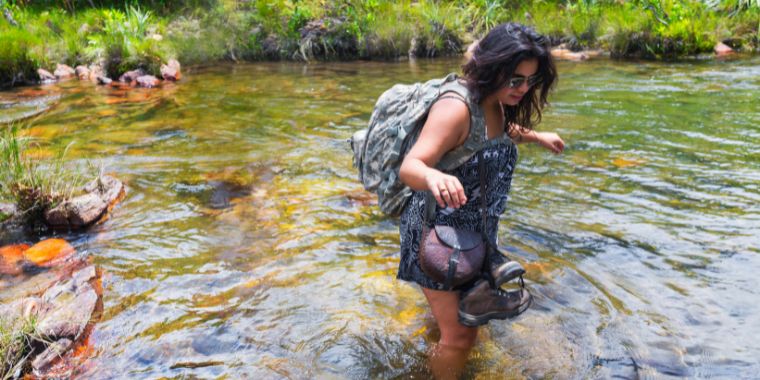
Various crossing techniques can be employed to ensure a safe and successful river or stream crossing. The sideways shuffle technique involves moving across the current by taking small sideways steps. This technique helps maintain balance and stability by keeping a wide stance and shifting weight from one foot to the other. The angled or zigzag technique involves crossing at an angle to the current, using a series of diagonal steps. This approach reduces the force of the current and makes it easier to maintain stability. The one step at a time technique is suitable for slower-moving waters, where you can focus on each step and maintain constant contact with the riverbed. For group crossings, the linking arms technique involves individuals joining hands or linking arms to create support and stability as they cross together.
Buddy System
Crossing a river or stream with a partner or in a group is highly recommended for safety purposes. The buddy system ensures that you have someone watching out for you and vice versa. When crossing with a partner or group, it is vital to maintain eye contact and communicate throughout the process. This allows for real-time assessment and adjustment of the crossing strategy if needed. Furthermore, the buddy system enables individuals to provide support and assistance to one another, especially in challenging or unexpected situations. In case of an emergency, having someone with you who can call for help or provide aid can be a lifesaver.
Beware of Underwater Hazards
While crossing a river or stream, it is essential to be aware of potential underwater hazards. Watch out for submerged rocks or boulders, as they can cause injury if you step on them or stumble. Similarly, avoid branches or fallen trees in the water, as they can entangle or trap you. Look for signs of deep holes or steep drop-offs, as these areas can be hazardous and may have strong currents. Additionally, be cautious of hidden debris or slippery surfaces, as they can make crossing more difficult and increase the risk of accidents. By staying vigilant and avoiding these hazards, you can safeguard your well-being during the crossing.
Respect the Power of Nature
Above all, it is crucial to respect the power of nature when crossing rivers and streams. These bodies of water can be unpredictable and pose significant risks if not approached with caution. Do not take unnecessary risks when attempting a crossing. If you are unsure about the conditions or the feasibility of the crossing, it is wise to choose an alternative route or wait for better conditions. Always be prepared to turn back if the situation becomes unsafe. Remember, your safety should always be the top priority when facing the power of nature.
By following these safety tips and being vigilant, you can safely cross rivers and streams, minimizing the risks associated with these natural obstacles. Take into account the specific conditions and challenges you may encounter, and always prioritize your safety and the safety of those crossing with you.