
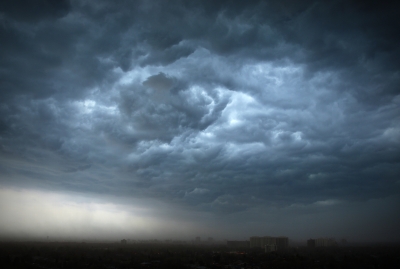
Is New York ready for this year’s hurricane season? The short answer is no.
New York City is surrounded by large land masses on three sides as well as Staten Island to the south. On the west we have New Jersey (which is connected to North America, unfortunately ;))(actually I’m a fan), to the north we have the Bronx, to the east Queens and Long Island. This unique geographical position creates a naturally occurring sheltered harbor.
For more than one hundred years this “sheltered harbor” has kept New Yorkers safe from hurricanes that fell under a certain intensity.
Big Industry and the Government continued to keep their heads buried in the sand in response to the reality of climate change. This continues to this day.
Finally in 2011, as predicted by scientists, Hurricane Irene hits NYC causing power outages, flooding, and wreaking havoc on city infrastructures.
The following fall, almost a year later, Hurricane Sandy slams into the New York Metropolitan Area destroying much of the Rockaways and many businesses in the Wall St. area of Lower Manhattan. Many of the business affected on Maiden Lane have not come back to the area. The South Ferry 1 train station only came back in to functioning use 2 months ago.
Many emergency procedures to prevent subway flooding have not been developed and are years away from being implemented. Some of these procedures include building temporary walls around entrances and exits. Inflatable bladders to plug entrance ways are also being considered. While these solutions are being considered The National Weather service is projecting a 70% chance that we’ll have a unusually strong hurricane season this year.
The National Weather Service website states,
“The 2013 seasonal hurricane outlook reflects a combination of climate factors that have historically produced above-normal Atlantic hurricane seasons. The three main climate factors for this outlook are:1) The ongoing set of atmospheric conditions that have been producingincreased Atlantic hurricane activity since 1995, which includes
2) An expected continuation of above-average sea surface temperatures (SSTs) across the tropical Atlantic Ocean and Caribbean Sea, and
3) A likely continuation of ENSO-neutral conditions (i.e., no El Niño or La Niña); meaning El Niño is not expected to develop and suppress the hurricane season.This combination of climate factors historically produces above-normal Atlantic hurricane seasons. The 2013 hurricane season could see activity comparable to some of the very active seasons since 1995.”


The Power Grids’ Readiness
Somewhat ready.
The approach of sandbags and plywood was not very effective last year in keeping the power plant at 14th street from blowing up it’s transformer. This happened when the Hudson River flooded into the Con Edison electric plant. This resulted in me and the rest of lower Manhattan to be without water, our water pumps rely on electricity, and electricity for two weeks.
Con Ed has made $400 million in improvements since Sandy’s landfall last October. They constructed over a mile’s worth of concrete walls around power substations, like the one I mentioned on 14th st. They also raised transformers of the ground to keep them from shorting out or exploding like last October’s explosion.
Hospital Readiness
Not Ready.
New York had to evacuate no less than five hospitals during Hurricane Sandy. Miraculously there were no fatalities but the process was risky and dangerous.
The director of The National Center For Disaster Preparedness at Columbia University says there are still many problems with the infrastructure and organization of its disaster preparedness team.
Dan Amira writes for New York Magazine,
However, the costs of ameliorating these issues are high — and federal cutbacks to hospital preparedness funds have made the effort more difficult at the worst time. ”We’re on a collision course with fate here,” Redlener says, “because we’re just creating a situation where disaster resiliency is not where it should be and the resources to improve this resiliency are simply not available.”Since Sandy, “There’s no evidence that significant improvements have been made yet,” Redlener tells us, though not due to a lack of effort. “There’s a lot of meetings happening, so I don’t think the hospitals are ignoring it. I just think that we’re dealing with a short time frame and very little money.”
Gas Station Readiness
Not Ready.
People were waiting for hours to get petrol often getting in fist fights over who was next in line similar type issues. Local law enforcement had to pull security details at many gas stations in the Metro area.
Basically Cuomo says that creating an emergency gasoline reserve is expensive and hypothetical.
AAA spokesman told Reuters news that “We would, in essence, be in the same situation minus some additional gasoline stations still having power thanks to backup generators.”
The Shoreline, Rockaways, & Atlantic Citie’s Readiness.
Not Ready.
John Cori, local activist and member of Friends of Rockaway, says, “We are going to be at the mercy of the next couple of storms.”
Most of the housing infrastructure has yet to be rebuilt.
Staten Island plans to reinforce it’s dune system but that won’t be in place until the middle of the hurricane season.
Conclusion
The New York Metropolitan area is new to hurricane storm preparedness as it is new to the experience of super storms and hurricanes. In the future emergency response infrastructure will be prepared perhaps; but that time has yet to pass.